What This Mill Is Built For
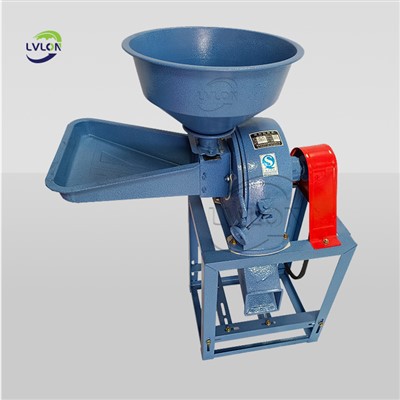
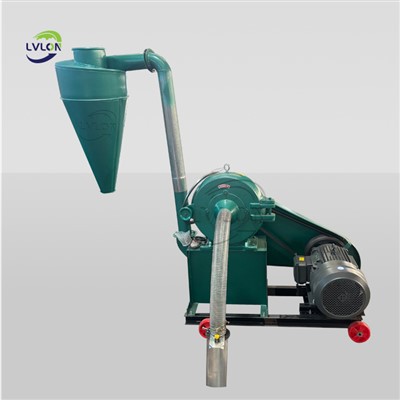
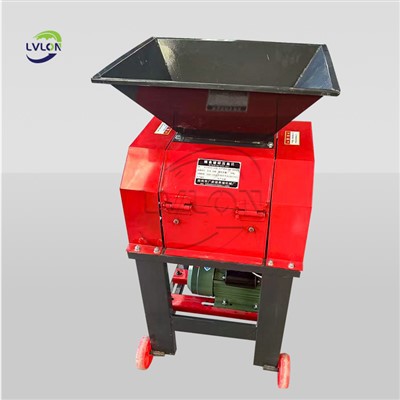
Lv-24B is a disc-type grain mill that sits somewhere between a kitchen appliance and an industrial roller mill. It grinds 150 kg of wheat or corn per hour - enough to keep a small village mill running all day, but not so large that it needs a dedicated three-phase transformer and a building extension.
Two things about this machine tend to catch buyers' attention. First, flour and bran come out of separate spouts. The centrifuge action inside the grinding chamber throws the heavier fine flour down into a collection drum while lighter bran particles exit through a side chute. No post-grind sifting. Second, the flour does not come out hot. The cooling fan built into the motor housing pulls air through the casing and across the grinding discs - surface temperature on the disc housing hovers around 55–65°C after two hours of continuous running, and the flour at the outlet measures about 35–45°C. For comparison, a typical high-speed hammer mill runs 70–90°C at the outlet, and at that temperature wheat gluten starts denaturing. A baker who grinds his own flour for artisan bread notices the difference.

Inside the Grinding Chamber
A pair of white iron discs do the work. The lower disc is stationary, bolted to the frame. The upper disc spins at roughly 2,800–3,200 RPM driven by a 7.5 kW three-phase motor through a belt-and-pulley transmission.
Grain drops from the top hopper into the center of the disc gap. Centrifugal force throws material outward through progressively tighter clearances between the disc faces. The teeth on both discs are cast into a spiral pattern - coarser at the center to crack whole grains, finer toward the edge to produce the final flour consistency. Disc clearance, and therefore flour fineness, is controlled by a handwheel on the side of the machine. Turn clockwise to tighten the gap for finer flour. Counterclockwise to open it for coarse meal or cracked corn. A half-turn changes the output noticeably; a full turn takes you from bread flour to coarse polenta.
White iron as a disc material was chosen for wear resistance over outright hardness. It is a high-chromium cast iron - harder than grey iron, not as brittle as tool steel. In a mill running 500–800 kg of grain daily, a set of discs lasts roughly 8–14 months before the tooth profile rounds off enough to affect grind consistency. Changing discs is a one-wrench job: loosen the lock nut on the main shaft, lift off the worn upper disc, seat the new one, tighten. The first time takes about 20 minutes. The second time, ten.
The Motor That Handles Bad Electricity
The 7.5 kW three-phase induction motor on the Lv-24B uses pure-copper stator windings with winding geometry that provides a wider-than-standard voltage tolerance. It starts and runs reliably anywhere from about 320 V to 420 V on a nominal 380 V line. In practice, this means a rural mill in a region where the grid sags to 330 V during peak evening hours will not burn its motor on restart.
The cooling is not an afterthought. The motor housing has densely spaced cooling fins and a shaft-driven fan pulling air across the casing. That same airflow passes across the grinding chamber before exhausting. Two heat sources - the motor and the disc friction - share one cooling path. Effective, and it keeps the parts count down.

Specifications
| Parameter | Spec |
|---|---|
| Model | Lv-24B |
| Brand | Lvlon |
| Capacity | 150 kg/h |
| Motor | 7.5 kW three-phase induction (380 V) |
| Disc material | White iron (high-Cr cast iron) |
| Main components | Hopper, grinding discs, adjustment handwheel, frame, flour collection drum, bran outlet, flour outlet |
| Net weight | 130 kg |
| Gross weight | 137 kg |
| Dimensions | 970 × 400 × 1,040 mm |
| Crate dimensions | 1,060 × 540 × 480 mm |
| Warranty | 1 year |
What the Mill Handles and What It Does Not
Dry wheat and dry corn are the main work. Sorghum, millet, dried cassava chips, soybean meal, and similar granular grains also process without issue. Grain moisture needs to be below about 14%. Damp grain smears across the disc faces instead of cracking - it forms a paste that clogs the tooth channels and glues the discs together when the machine cools. If you have just-harvested grain, spread it on a concrete pad in the sun for a day or two before milling. A grain moisture meter is cheap insurance.
The mill is not designed for oily seeds - peanuts, sesame, sunflower seeds will gum up the discs. It is not a hammer mill - it will not handle fibrous materials like dried grass, straw, or corn stalks. For those, you need a different machine.
Changing from one grain to another is straightforward. Run a handful of the new grain through to purge residual flour from the previous batch from the chamber and outlet channels. For a miller who grinds 20 kg of wheat for Mrs. Chen and then 15 kg of corn for Mr. Wang back-to-back, this takes less than a minute of transition time.
Setting Up and Dialing In
Bolt the machine to a concrete floor through the four anchor holes in the base. At 130 kg and 2,800 RPM, the mill generates enough vibration under load that free-standing on a dirt floor will walk the machine across the room over the course of a day. Use a 4 mm² or heavier copper cable for the electrical connection, with a dedicated 32 A three-phase breaker. Ground the frame. Run the ground wire to a driven rod, not to the neutral - rural three-phase supplies in some countries float the neutral, and grounding to neutral under those conditions is dangerous.
On first startup, let the machine run empty for two or three minutes. Listen. A steady motor hum is normal. A metallic scraping sound means the discs are touching - back the handwheel off a quarter-turn until the noise stops. Drop a small handful of grain into the hopper and watch what comes out of both outlets. Adjust the handwheel in half-turn increments until the flour consistency and bran separation look right for what you are making. For whole wheat flour (atta-style), one pass at medium-fine setting is usually right. For refined white flour, grind once at a coarse setting to crack the grain, then a second pass at a fine setting. The double-grind approach also runs cooler - less work per pass, less heat buildup.
Daily Operation
A single operator runs this mill. Shovel grain into the top hopper. Bag flour from the collection drum. Bag bran from the side chute. Adjust the handwheel when switching between products. The control panel has two buttons: green for start, red for emergency stop. No touchscreen. No PLC. No settings to accidentally bump and spend half an hour trying to undo.
At the end of the run, stop feeding grain and let the machine run empty for about 30 seconds to clear the discs. Then cut power. Never shut down with grain still between the discs - the residue cools, hardens, and can lock the discs together. If this happens (and it happens to everyone eventually): switch off at the breaker, use a wrench on the main shaft pulley to turn the motor backward half a rotation, and the discs will free up.

Maintenance
Every 50 running hours, check belt tension. A loose belt slips on the motor pulley, heats up, and fails prematurely. Press the belt midpoint with your thumb - about 10–15 mm of deflection is right. Adjust the motor base bolts if needed.
Every 200 hours, grease the main shaft bearings (two grease nipples, one on each side of the housing - use high-temperature lithium grease). Blow out the motor cooling fins and air intake with compressed air or a brush if the mill operates in a dusty environment - a clogged cooling path negates the low-temperature advantage.
Disc replacement is straightforward once you have done it. The wear pattern is visible - fresh discs have sharp, well-defined tooth edges across the face. Worn discs have rounded, polished-looking tooth tips, especially near the outer edge where grinding pressure is highest. If the flour is getting coarser even with the handwheel fully tightened, the discs are due.
FAQ
Q1: I have single-phase 220 V power. Can this mill work?
Q2: How many customers can I serve in a day with 150 kg/h capacity?
Q3: How fine can the flour get?
Q4: Can I grind wet or freshly harvested grain?
Q5: Does the machine arrive assembled? Do I need a technician?