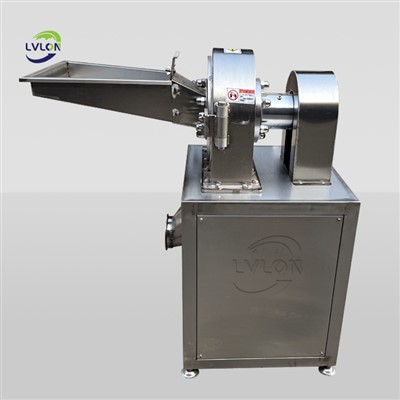
Lvlon makes recycling and size-reduction equipment in Henan, China. The LL series double shaft shredder is built on three decades of European and American shredder experience, localized and refined for waste recycling markets. It serves scrap yards, solid waste facilities, appliance dismantling lines, wood and biomass recovery, and RDF preprocessing. In-house steel fabrication, shaft machining and knife manufacturing. Factory-direct pricing. OEM on knives, hopper and discharge size.
Shearing, Not Smashing
A hammer crusher smashes material with high-speed impact. It cannot handle metal-the hammers and screens are destroyed. It cannot handle soft material-cloth and tires just bounce. The double shaft shredder works on a different principle entirely.
Two shafts rotate in opposite directions. The toothed cutters mounted on each shaft intermesh. Material entering between the shafts is caught by the interlocking teeth and cut-the way scissors cut-while being torn and squeezed. Metal is severed, not smashed. Soft material is torn apart, not bounced away. This is why the shear-type shredder handles mixed waste that defeats every impact machine: appliances (metal shells, plastic liners), cable (copper, rubber), old furniture (wood, cloth, metal fittings), tires (rubber, steel wire).
The cost of the shear principle is output size. The shredded material falls through between the cutter discs at a few centimeters-fine enough for volume reduction, transport and downstream separation, but not a fine product. Applications needing fine, uniform output (RDF fuel spec) run the double shaft shredder as the first stage of a two-stage line.
Low Speed Is the Point
The shafts turn at 14–23 rpm. That seems slow-deliberately. Cutting force is torque, and torque is the inverse of speed. A high-speed rotor encountering hard material spins over it; a low-speed, high-torque shaft meets hard material and cuts through it. Each shaft is driven by its own motor and gearbox-18.5 to 90 kilowatts per shaft-so the two shafts share the load of a 2-meter refrigerator shell without bogging down.
The cutter set scales with the machine. The LL-600 runs 20 cutters of 260 millimeters; the LL-2000 runs 40 cutters of 650 millimeters on a 2425×1400-millimeter hopper that swallows whole pallets, furniture and appliance shells without pre-cutting.
The Alloy Steel Cutters
The knives are the heart of the machine and the main wear item. Rotating cutters (moving knives) are mounted on the shafts; fixed knives are bolted to the frame. The gap between them determines the cutting action: too wide and material is squeezed through uncut. The knives are special alloy steel-hard, sharp, and resistant to dulling against metal and wood. Worn knives are rebuilt by hard-facing or replaced. The machine carries 20 to 40 of them depending on model.
PLC: The Machine Unjams Itself
Mixed waste always contains something unexpected-a steel bar, a concrete chunk. The PLC control watches the drive load. When material is too large or too much, the system automatically reverses the shafts: back off the jammed piece, reverse, go forward again at a different angle, and if the piece still will not pass after repeated attempts, stop and alarm. The operator does not stand by the machine with a pry bar. Continuous production does not stop for every stray piece of steel.
Specifications
| Model | Shaft power | Speed | Capacity | Cutters | Cutter dia. | Hopper |
|---|---|---|---|---|---|---|
| LL-600 | 18.5 kW×2 | 23 rpm | 0.5–0.8 t/h | 20 | 260 mm | 820×900 mm |
| LL-800 | 22 kW×2 | 20 rpm | 1–2 t/h | 20 | 350 mm | 1000×1000 mm |
| LL-1000 | 30 kW×2 | 18 rpm | 2.5–3.5 t/h | 25 | 400 mm | 1200×1000 mm |
| LL-1200 | 45 kW×2 | 18 rpm | 5–8 t/h | 30 | 500 mm | 1400×1000 mm |
| LL-1500 | 55 kW×2 | 16 rpm | 8–12 t/h | 32 | 550 mm | 2000×1200 mm |
| LL-1800 | 75 kW×2 | 16 rpm | 10–18 t/h | 36 | 600 mm | 2300×1200 mm |
| LL-2000 | 90 kW×2 | 14 rpm | 15–25 t/h | 40 | 650 mm | 2425×1400 mm |
All models: Twin motor/twin gearbox direct drive, PLC auto reverse and stop protection, special alloy moving + fixed knives, extra-thick steel frame. 1-year warranty, lifetime maintenance. OEM available.
FAQ
Q: Single shaft or double shaft shredder?
Double shaft: two intermeshing shafts, shear action, mixed material and metal capability, coarser output (centimeters), unjam-by-reverse. Single shaft: one rotor with a screen, finer and more uniform output, good for film and plastic, but vulnerable to metal and stringy material. Mixed waste, metal, oversized items → double shaft. Fine uniform output (RDF spec) → single shaft, or double shaft plus a fine grinder in series.
Q: Can it shred metal?
Yes-copper wire, cable, and copper, aluminum, lead scrap and steel plate up to 5 millimeters are standard duty. Solid billets and plate over 5 millimeters exceed the shear capability-that is metal-crusher territory. Do not feed solid steel shafts, gears or hammer heads; they will damage the cutters.
Q: What happens when it jams?
Let the PLC auto-reverse handle it-normally a few reversals clear the piece. If repeated reversals fail, stop, open the cutting chamber, clear it and check the knives for chipped edges. Frequent jams mean overfeeding or out-of-spec material-adjust the feeding.
Contact Lvlon for model selection, line design and factory quotation.