



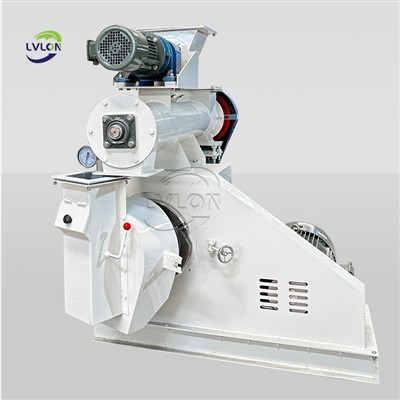
Biomass Wood Pellet Machine
Product Overview
Engineered for continuous 24/7 commercial operation, the Industrial Biomass Wood Pellet Machine is a high-performance compression system designed to convert forestry and agricultural residues-such as sawdust, wood chips, shavings, straw, and rice husks-into dense, uniform fuel pellets. This robust solution directly serves pellet manufacturing plants, agricultural processing facilities, and renewable energy contractors seeking reliable, high-output fuel production with maximum uptime, low operational overhead, and a fast return on investment (ROI).
Core Technical Advantages
Heavy-Duty Gearbox Transmission
Industrial pellet production demands continuous mechanical torque under extreme high-load conditions.
• Direct Gear Drive: Replaces traditional belt-driven systems to entirely eliminate slip, maximize power transmission efficiency, and maintain stable output speeds.
• Structural Durability: Utilizes high-strength alloy steel gears and heavy-duty industrial bearings to minimize mechanical vibration and significantly lower long-term wear, ensuring years of trouble-free service.
Optimized Compression Ratio for Dense Pellets
Raw biomass suffers from low bulk density, making transport and storage economically inefficient. The precision-engineered pelletizing chamber leverages natural material lignin to bond particles effectively.
• Achieved Bulk Density: Produces uniform pellets with a high bulk density of 600–750 kg/m³, drastically cutting logistics and transport costs per energy unit.
• Structural Integrity: Ensures low dust generation and consistent geometric shapes, directly improving combustion efficiency in industrial boilers and residential stoves.
Multi-Material Compatibility
Seasonal fluctuations in raw material supply can disrupt plant operations. This machine is engineered to process a diverse range of biomass resources without requiring complex structural modifications:
• Wood Biomass: Sawdust, wood chips, shavings, bamboo powder, and forestry waste.
• Agricultural Biomass: Straw, corn stalks, rice husks, and agricultural processing by-products.
• Critical Feedstock Note: Optimal performance requires a strictly controlled feedstock moisture content of 10%–15%. Material outside this range risks extrusion failure or die blockage.
Wear-Resistant Pelletizing Components
Continuous operation exposes the ring die and rollers to extreme friction and pressure.
• Material Selection: Dies and rollers are manufactured from premium wear-resistant alloy steel with advanced controlled heat treatment to extend operating lifecycles and reduce replacement frequency.
• Maintenance Efficiency: Designed with modular components to allow straightforward inspection, quick die/roller replacement, and minimal operational downtime.
Flexible Sizing Specifications
Different end-user applications demand specific pellet diameters. The system supports interchangeable die configurations to produce:
• 6 mm & 8 mm: Standard sizes optimized for residential heating stoves and commercial pellet boilers.
• 10 mm & 12 mm: Heavy-duty sizes tailored for large industrial power plants and animal bedding applications.
Industrial Applications
Commercial Pellet Plants: Large-scale manufacturing of high-grade renewable fuel pellets for domestic and export energy markets.
Wood Processing Facilities: On-site conversion of sawmill waste, wood chips, and sawdust into a high-value, revenue-generating product.
Agricultural Operations: Processing crop residues and agricultural waste into stable biomass fuel or premium livestock bedding.
District Heating Projects: Supplying dedicated, uniform fuel pellets for municipal and industrial heating boilers.
Addressing Key Production Challenges
|
Challenge |
Industrial Solution |
|
High Handling Costs of Biomass Waste |
Converts low-value, bulky sawdust and agricultural residue into dense, high-margin commercial fuel. |
|
High Equipment Downtime |
Industrial-grade structural design and robust gearbox transmission minimize mechanical failures during round-the-clock production cycles. |
|
Inconsistent Pellet Quality |
Stable mechanical pressure and precise die compression ratios ensure uniform pellet diameter and density batch after batch. |
Technical Specifications
|
Parameter |
Specification Details |
|
Equipment Type |
Industrial Biomass Pellet Machine |
|
Compatible Raw Materials |
Sawdust, wood chips, shavings, agricultural residues, forestry waste |
|
Optimal Feedstock Moisture |
10% – 15% |
|
Pellet Diameter Options |
6 mm / 8 mm / 10 mm / 12 mm |
|
Achieved Pellet Density |
600 – 750 kg/m³ |
|
Transmission System |
Heavy-duty industrial gearbox drive |
|
Operation Mode |
Continuous industrial production (24/7 capable) |
FAQ
Q: What materials can be used in a Biomass Wood Pellet Machine?
A: The machine processes various biomass materials including sawdust, wood chips, wood shavings, rice husk, straw, bamboo powder, and forestry waste. Material suitability depends on moisture content, particle size, and composition.
Q: What moisture content is required for biomass pellet production?
A: Biomass materials perform best with a moisture content maintained around 10%–15% before pelletizing. Excess moisture or overly dry material compromises structural pellet quality and production efficiency.
Q: What is the production capacity of the machine?
A: Capacity varies based on the specific model, motor power, chosen pellet diameter, and raw material characteristics. Industrial models can be configured for everything from mid-sized commercial setups to large-scale automated pellet plants.
Q: What size pellets can the machine produce?
A: Common pellet sizes are 6mm, 8mm, 10mm, and 12mm. Different ring die specifications can be interchanged according to your exact end-user application requirements.
Q: Can the machine be used for wood waste recycling?
A: Yes. It is widely deployed across sawmills and timber processing plants for converting sawdust, wood chips, and processing waste into valuable biomass fuel pellets.
Q: How long is the service life of the pellet machine?
A: Service life depends on operating intensity, raw material abrasiveness, maintenance routines, and the timely replacement of wear parts (dies and rollers). Proper preventive maintenance and regular inspections significantly maximize equipment lifespan.
Hot Tags: biomass wood pellet machine, China biomass wood pellet machine suppliers, factory, Biomass Wood Chipper Machine
You Might Also Like


Send Inquiry