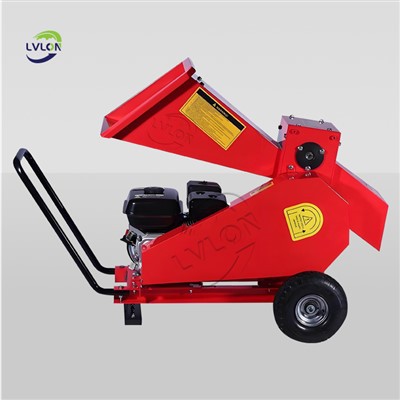
Lvlon is a machinery manufacturer in Henan, China, building the wood hammer crusher machine for wood pellet plants, briquette factories, composite board producers and feed plants across Asia, Africa and Latin America. As the factory, we supply wholesalers, bulk buyers, distributors and agents directly-no middle layer. In-house fabrication of every stage. One supplier, one warranty. OEM/ODM on screen and configuration, with your brand or specification. Spare parts stocked and air-freighted in 5–15 days.
The Basic Unit of the Pellet Line
Every pellet line starts the same way: biomass in, fine powder out. The wood hammer crusher machine is that first stage-cotton stalk, wood chips, wheat straw, palm kernel, bark, agricultural waste-all broken to the fineness the downstream mill requires. The HM series is the mid-size modular family: 300 to 3,000 kilograms per hour, matching small workshops through mid-size pellet lines.
Two Controls for Output Size
| Model | Power | Capacity | Weight |
|---|---|---|---|
| HM200 | 5.5 kW | 300–350 kg/h | 260 kg |
| HM300 | 7.5 kW | 400–500 kg/h | 350 kg |
| HM400 | 11 kW | 600–800 kg/h | 450 kg |
| HM500 | 22 kW | 900–1,000 kg/h | 750 kg |
| HM600 | 30 kW | 1,500–2,000 kg/h | 900 kg |
| HM800 | 45 kW | 2,000–3,000 kg/h | 1,300 kg |
The operator controls fineness two ways. The hammer-to-screen gap: wider for coarse, tighter for fine-one adjustment covers different product requirements. The screen aperture: multiple interchangeable screens match the feedstock and the crushing need. Cotton stalk and bark do not crush the same; the controls adapt the machine to the material.
Uniformity and Transport
Uniform discharge fineness is the machine's quality claim: the hammer arrangement and hammer-screen gap are precision-optimized, so the output stays even. Uneven feed means low forming rate and loose pellets downstream-uniformity is the pre-treatment's contribution to pellet quality.
The transport side is built in. The crushed material connects to an air blower for efficient collection and pneumatic conveying: crusher to cyclone separator to silo, no manual handling, continuous feed to the pellet mill. For a mid-size line, that automation removes a labor station.
Maintenance Discipline
The operating guide is simple and strict. Check bolts and connections regularly-crushing vibrates, and loose bolts are the common failure-and tighten immediately. Lubricate on schedule for smooth running. Watch the machine: sudden heavy vibration means a broken hammer or rotor imbalance; abnormal noise means foreign material or bearing damage; overheating means lubrication or overload. Stop and inspect immediately when any of the three appears.
FAQ
Q: HM series or FSP series (industrial)?
Capacity ladder. FSP series: 2.5–22 t/h-large pellet lines and standalone crushing operations. HM series (this machine): 300–3,000 kg/h-mid-size pellet lines, briquette plants, workshops, 5.5–45 kW modular. Small and mid capacity: HM. Large capacity: FSP.
Q: How is the output size adjusted?
Two controls. The hammer-to-screen gap: wider for coarse, tighter for fine. The screen aperture: multiple interchangeable screens selected by feedstock and crushing requirement. Both are operator-adjustable.
Q: How is the crushed material transported?
By air blower. The machine connects directly to an air blower for collection and pneumatic conveying-crusher to cyclone to silo, no manual handling, continuous feed downstream.
Contact Lvlon for model selection, factory wholesale price, distributor terms and container loading plan.