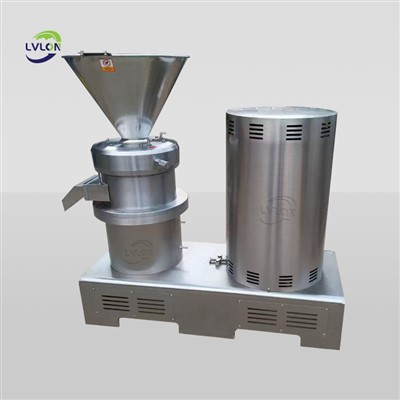
If you've ever worked in the food processing, pet food manufacturing, or even pharmaceutical industries, you know how crucial it is to have reliable, safe equipment that doesn't cut corners. As a supplier of Bone Crusher Machines, I get tons of questions from new and repeat clients alike: "Are there actual international standards for these things?" It's a fair question-you don't want to drop big money on a machine only to find it doesn't meet basic safety rules, or that it'll break down in six months because it was built to no specific specs.
Let's cut to the chase: yes, there are global standards, but they're not all the same, and they apply differently depending on what you're using the bone crusher for. A lot of people mix up "international" with "universal," but the truth is, most standards are set by major regional bodies that get adopted across borders, especially in industries that trade internationally. Today, I'll break down what those standards are, how they affect the machines we build, and why paying attention to them isn't just a box to check-it's how you protect your team, your product, and your bottom line.
First, let's talk about what a bone crusher actually does, because that's key to understanding why standards exist. Unlike a regular Industrial Spice Grinder that crays dry, brittle spices, a bone crusher has to handle wet, hard, sometimes fatty material-think raw beef bones, poultry frames, even fish bones for pet food or fishmeal. That means it's got heavy-duty components: large motors, rotating blades or hammers, and chambers that have to stay food-safe so no bacteria or metal shavings get into your final product. The last thing anyone wants is a recalled batch of pet food because a loose metal part from the crusher ended up in the kibble.
Now, the main international standards you'll hear about for this kind of equipment all tie back to either the food and beverage sector, industrial machinery safety, or both. The big one for food-related equipment is ISO 22000, right? Wait, no-actually, ISO has a whole series for machinery safety, specifically ISO 12100. That's the standard for general machinery risk assessment, which applies to any industrial machine, including bone crushers. It covers everything from how sharp the rotating parts are (to prevent accidental contact) to emergency stop buttons that work fast enough to stop a 500kg motor before someone's hand gets pulled in.
But if you're using your bone crusher for food products-like processing bones into meat and bone meal (MBM) for pet food or even human food additives-then you also have to meet food safety standards, which often get harmonized internationally. The Codex Alimentarius Commission, which is the UN body that sets global food standards, has guidelines for processing animal-derived products, including equipment that touches those materials. That means the parts of your bone crusher that come into contact with bones (the hopper, the crushing chamber, the screens) have to be made of materials that don't react with food, don't leach chemicals, and are easy to clean. Most good suppliers, including us, build our Bone Crusher Machines to meet those Codex guidelines, plus the more specific national standards that often align with them.
Speaking of national standards that become international go-tos, there's 3-A Sanitary Standards in the U.S. and EHEDG in Europe. A lot of companies exporting to both regions will build machines to meet both, because if you don't, you can't sell into those markets. For example, if you're a pet food manufacturer in Germany, your bone crusher has to pass EHEDG testing, which checks how easy it is to take apart and clean without leaving crevices where bacteria like Salmonella can grow. Similarly, if you're selling to a plant in Texas, 3-A certification might be required to pass their food safety audits. We make sure all our machines are compatible with both because we work with clients all over the world, and it's way easier to build one machine that meets multiple standards than to customize every single order.
Wait, but what about if you're using a bone crusher for non-food applications? Like processing bones into biofuel or fertilizer? Then the standards are a little different, mostly focused on machinery safety and durability. ISO 9001, the quality management standard, is super relevant here because it ensures the machine is built consistently-no one wants a crusher that works great one day and burns out the next week because the internal parts were made with low-quality steel. For these industrial use cases, some clients also check for OSHA compliance (U.S.) or CE marking (Europe), which means the machine meets all EU safety and health requirements. CE marking is actually mandatory for any industrial machine sold in the EU, so that's a big one for any supplier doing business there.
Now, let's talk about what doesn't count as an international standard, because I've seen this trip up a lot of new buyers. Some suppliers will slap a "global standard" label on their machines that only meets a random Asian national standard, not the harmonized ones that are recognized worldwide. Or they'll compare a bone crusher to a Colloid Mill Homogenizer, which is a totally different piece of equipment used for finer, paste-like products, and say they use the same specs-big mistake. A colloid mill spins at way higher speeds and handles much softer material, so its safety and durability standards don't apply to a heavy-duty bone crusher that has to process 10 tons of bones an hour. That's why it's so important to ask suppliers exactly which standards their machine meets, and to ask for proof-like test reports or certification documents-instead of just taking their word for it.


From my side, as someone who's been supplying industrial grinding and crushing equipment for over a decade, I've seen firsthand the difference between a machine built to actual international standards and one that's just put together in a garage. A lot of small, uncertified manufacturers cut corners: they use thinner steel for the crushing chamber, so it warps after a few months of heavy use; they skip the safety interlocks that turn off the machine if the chamber is open; or they use low-quality motors that overheat and become a fire hazard. Those machines might be cheaper upfront, but you'll spend way more on repairs, downtime, and even fines if your local food safety inspector (or OSHA) shuts you down for using non-compliant equipment.
Another thing I hear all the time: "Do I need a different bone crusher for each country's standards?" No, not usually-if you pick a machine built to meet ISO 12100, Codex, and CE requirements, it will work in most markets around the world. The only exception is if you're working in a very specific niche, like processing bones for traditional medicine in a country with its own unique agricultural standards, but even then, those usually align with global guidelines pretty closely. The key is to work with a supplier who understands not just the equipment, but the regulations of the regions you're selling into. That's why we don't just sell machines-we walk our clients through which standards matter most for their specific use case, so they don't overspend on certifications they don't need, or miss ones that are mandatory.
Let's also touch on testing, because standards are only as good as the proof that the machine actually meets them. When we build our Bone Crusher Machines, we do a bunch of in-house tests: we run them at full load for 72 straight hours to make sure the motors and components don't fail, we test the safety interlocks to make sure they engage within half a second if the chamber is opened, and we send samples of the materials used in contact with food to third-party labs to confirm they meet Codex and 3-A standards. We also keep all those test reports on file for our clients-no hoops to jump through, just easy access to the proof they need for their own audits.
I know this all sounds like a lot to wrap your head around, especially if you're new to sourcing crushing equipment. The last thing you want is to order a machine, wait 8 weeks for it to arrive, only to find out it can't be used because it doesn't meet local standards. That's why we make it a point to be transparent with every client from the first conversation: we tell them exactly what standards our machines meet, how that applies to their business, and what (if any) additional testing they might need to do for their specific location. It's way better to clear that up upfront than to have a headache later.
If you're in the market for a bone crusher, or any other industrial grinding equipment-like an industrial spice grinder, colloid mill homogenizer, or powder grinding mill-don't hesitate to reach out. We've worked with hundreds of clients across dozens of industries, from small local pet food shops to large multinational food processing plants, and we can help you find the right machine that meets all the standards you need, fits your production volume, and stays within your budget. No sales jargon, no hidden fees-just honest advice and reliable equipment.
References
- ISO 12100:2010, Safety of machinery – General principles for design – Risk assessment and risk reduction. International Organization for Standardization, Geneva, Switzerland.
- Codex Alimentarius Commission (2020), General Standard for Food Additives (GSFA) and Guidelines for the Production, Processing, Labeling and Marketing of Organic Foods. Food and Agriculture Organization of the United Nations, World Health Organization.
- EHEDG (2021), Hygienic Design of Equipment for the Food and Drink Industry – General Principles. European Hygienic Engineering and Design Group, Brussels, Belgium.
- 3-A Sanitary Standards, Inc. (2022), Standard Number 10: Sanitary Design and Fabrication of Equipment for Food Products. McLean, Virginia, USA.
- Occupational Safety and Health Administration (OSHA) (2019), Machinery and Machine Guarding Standards (29 CFR 1910 Subpart O). U.S. Department of Labor, Washington, D.C., USA.
- ISO 9001:2015, Quality management systems - Requirements. International Organization for Standardization, Geneva, Switzerland.