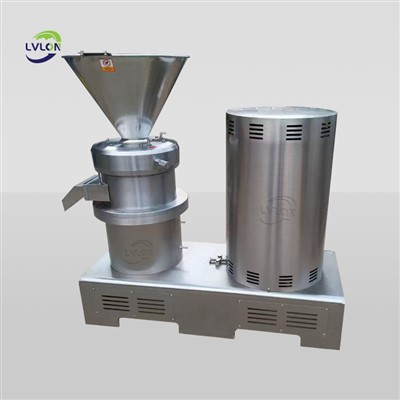
If you've ever walked through a commercial spice production facility, you've likely been surrounded by the warm, aromatic whir of industrial machinery turning raw, whole spices into the fine, consistent powders that end up on grocery store shelves, in restaurant kitchens, and in food manufacturing lines. As a supplier specializing in this gear, I get asked all the time: "What makes an industrial spice grinder work as reliably as it does, even when processing tough, abrasive spices like turmeric or dried ginger?" The answer lies not just in the design of the machine itself, but in the carefully selected materials that form its core components-materials built to handle heavy-duty use, resist corrosion, and preserve the purity of the spices being processed.
Let's start with the most critical part of any spice grinder: the grinding chamber and its internal parts. This is where the magic happens, and where materials matter most. Almost all industrial spice grinders are built with 304 or 316 stainless steel for these parts, and for good reason. 304 stainless is the workhorse of food-grade equipment, offering a high level of corrosion resistance that stands up to the oils, acids, and moisture present in most spices. It's also easy to clean-an absolute must for facilities that need to switch between different spice types without cross-contamination. But for facilities processing more aggressive spices, like cinnamon bark (which is tough and fibrous) or dried chili flakes (which can leave behind residue that's hard to remove), we often turn to 316 stainless steel. This grade has molybdenum added to its alloy, boosting its resistance to pitting and corrosion from saltier or more acidic materials, and it's even more resistant to heavy wear from grinding hard, dense spices like black pepper or coriander. The smooth, non-porous surface of stainless steel also prevents spices from sticking, making cleaning faster and ensuring every batch is processed evenly without leftover particles that could ruin the next run.
The rotating parts inside the grinding chamber-the hammers, blades, and screen-are where the real wear occurs. When you're grinding thousands of pounds of spices a day, these parts take a constant beating, so they can't be made of the same basic stainless steel as the chamber. Instead, we use hardened tool steels, like D2 or H13, for these components. D2 tool steel is air-hardened and has excellent wear resistance, making it perfect for blades that are striking and shearing spices into small pieces. H13, which is often used in high-temperature applications, works well for grinders that process spices that generate heat during grinding (like nutmeg, which releases oil when processed). We also coat some of these high-wear parts with materials like tungsten carbide or ceramic to extend their lifespan even further. Tungsten carbide coatings are extremely hard-they're used in everything from drill bits to industrial machinery-and they can double or triple the time between part replacements, which is a huge cost saver for our customers. For facilities that handle extra abrasive spices, like dried garlic or paprika, these coated parts are a game-changer.
Now, let's talk about other key components that often get overlooked but are just as important: the feed hopper, the motor housing, and the base of the machine. The feed hopper is where raw spices are loaded into the grinder, so it needs to be durable and easy to access. Most of our industrial grinders feature feed hoppers made of 304 stainless steel, with a sloped design that prevents spices from clogging and ensures they flow smoothly into the grinding chamber. Some hoppers even have adjustable gates to control the feed rate, which helps prevent overloading the machine and ensures consistent grind size. The motor housing, on the other hand, is usually made of cast iron or heavy-duty aluminum. Cast iron is incredibly sturdy and absorbs vibration well, which is important for the large, high-torque motors that power industrial grinders. Aluminum is lighter and more corrosion-resistant, so it's a good choice for facilities that need to move their grinders around occasionally, or for models that are used in slightly more humid environments.


The screen that sits at the bottom of the grinding chamber- which determines the final particle size of the spice powder-also needs careful material selection. These screens are often made of perforated stainless steel, with hole sizes ranging from 0.1 mm to several millimeters, depending on the desired grind. For extra fine powders, like the turmeric powder used in curries, we use screens with smaller, precision-drilled holes made of 316 stainless steel to maintain accuracy. For coarser grinds, like the crushed cumin used in Mexican dishes, screens with larger holes work well, and many customers opt for 304 stainless steel here since the wear is less severe.
Of course, a grinder is only as good as its ability to handle different spices without compromising safety or quality. That's why many of our clients also use complementary equipment alongside their industrial spice grinders, like the Powder Grinding Mill and Bone Crusher Machine, to prepare ingredients before they reach the main grinder. The Powder Grinding Mill, for example, is perfect for turning dried herbs or mild spices into a fine powder before they go through the industrial grinder, reducing the load on the main machine and improving consistency. The Bone Crusher Machine is essential for facilities that process spices that come with bone fragments, like dried meat-based seasonings or certain types of paprika, ensuring that any hard, unwanted materials are removed before they reach the grinding chamber. For customers working with viscous or liquid-spice blends, the Colloid Mill Homogenizer is another great addition, as it can mix and grind materials into a smooth, uniform paste or liquid, which can then be processed further with the grinder if needed.
One question I get a lot is why we don't use cheaper materials, like carbon steel, for industrial spice grinders. The simple answer is that carbon steel is not food-grade-it can rust, and the rust can contaminate the spices, which is a major issue for food safety. Even if the machine is coated, the coating can wear off over time, leaving the carbon steel exposed. Stainless steel is more expensive upfront, but it's non-porous, food-safe, and resists corrosion, so it lasts much longer and requires less maintenance, saving our customers money in the long run. Another common misconception is that all grinders are the same- that a machine used for grinding coffee beans can be repurposed for spices. That's not true: coffee beans have different hardness and oil content than spices, so a grinder built for coffee would wear out quickly when processing spices, and could even contaminate the spice with coffee oils. Our Industrial Spice Grinder is specifically designed with materials and components tailored to handle the unique properties of spices, from tough fibrous barks to delicate seeds.
Another factor we consider when selecting materials is food safety compliance. All of the materials we use for the parts that come into direct contact with spices meet FDA (U.S. Food and Drug Administration) and EU food safety standards, which is non-negotiable for any food processing equipment. No matter how durable a material is, if it can't come into contact with food safely, it's not a viable option. We also make sure that all of our grinders are easy to disassemble for cleaning and maintenance, with no hard-to-reach crevices where spices could get stuck and cause cross-contamination.
As an industrial spice grinder supplier, our job isn't just to sell a machine-it's to provide a solution that works for our customers' specific needs. Whether a customer is a small-batch spice producer grinding 500 pounds a week or a large food manufacturer processing 50,000 pounds a day, we work with them to select the right materials for their grinder based on the types of spices they process, their desired grind size, and their budget. For example, a small-batch operation focused on dried basil and oregano might opt for a grinder with 304 stainless steel components and tungsten carbide-coated blades, while a large facility processing hard, abrasive spices like black pepper and cardamom would need a machine with 316 stainless steel grinding chambers and H13 tool steel blades to handle the heavy wear.
If you're in the market for an industrial spice grinder, it's important to ask questions about the materials used in the machine-not just about the size or power. Ask about the grade of stainless steel in the grinding chamber, the material of the blades and screen, and whether the components meet food safety standards. A good supplier should be able to walk you through the material selection process and explain how it will impact the performance and lifespan of the grinder.
At the end of the day, the materials used in an industrial spice grinder are the backbone of its performance. They determine how well the machine processes spices, how easy it is to clean, how long it lasts, and whether it complies with food safety regulations. As a supplier, we invest in high-quality materials because we want our customers' businesses to succeed-when their grinders work reliably, they can produce consistent, high-quality spices, meet their production goals, and keep their customers happy.
If you're looking for an industrial spice grinder that's built with durable, food-safe materials and tailored to your specific needs, we're here to help. Whether you need a grinder for small-batch production or large-scale commercial use, we can work with you to find the right solution. Don't hesitate to reach out to discuss your requirements and find the perfect equipment for your spice processing operation.
References:
- "Stainless Steel Alloys for Food Processing Equipment". American Iron and Steel Institute, 2023.
- "Tool Steel Selection for Industrial Machinery". ASM International, 2022.
- "Food Safety Standards for Food Processing Equipment". U.S. Food and Drug Administration, 2021.
- "Wear Resistance in Industrial Grinding Applications". Journal of Food Engineering, vol. 198, 2020, pp. 112-121.