



Dog Food Production Line
We're a feed machinery company that does both equipment manufacturing and export. Over the years, we've picked up solid experience in designing and delivering dog food production lines. Dog food is pretty different from regular livestock or poultry feed – a dog's gut and nutritional needs mean the feed has to be extruded. The ingredient mix, pellet shape, and coating process all have their own requirements. So we've built a full set of solutions – from grinding, mixing, extrusion, drying, coating, cooling to packaging – with capacities ranging from 100 kg/h up to 5 t/h. That covers different needs depending on where our customers are in their growth.
Core setup and process advantages

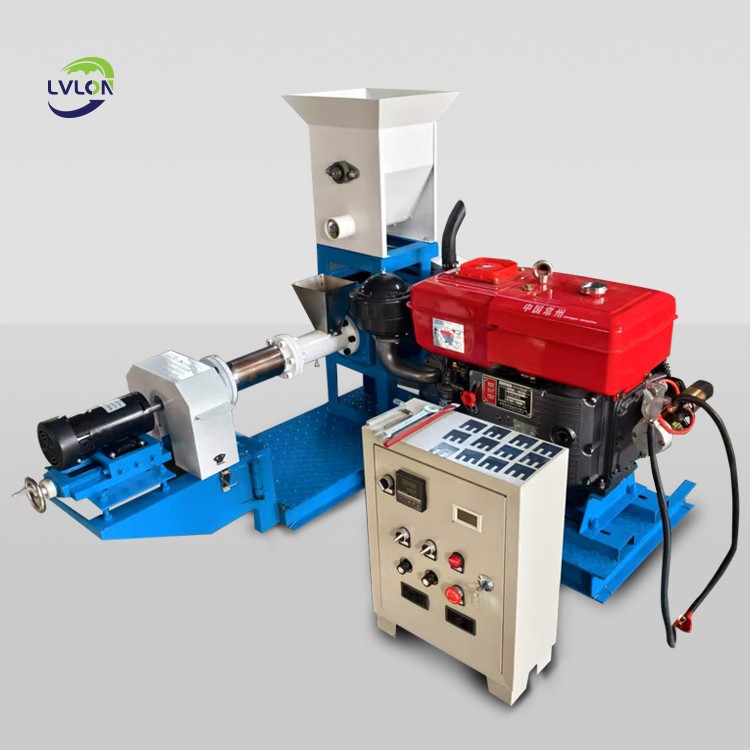
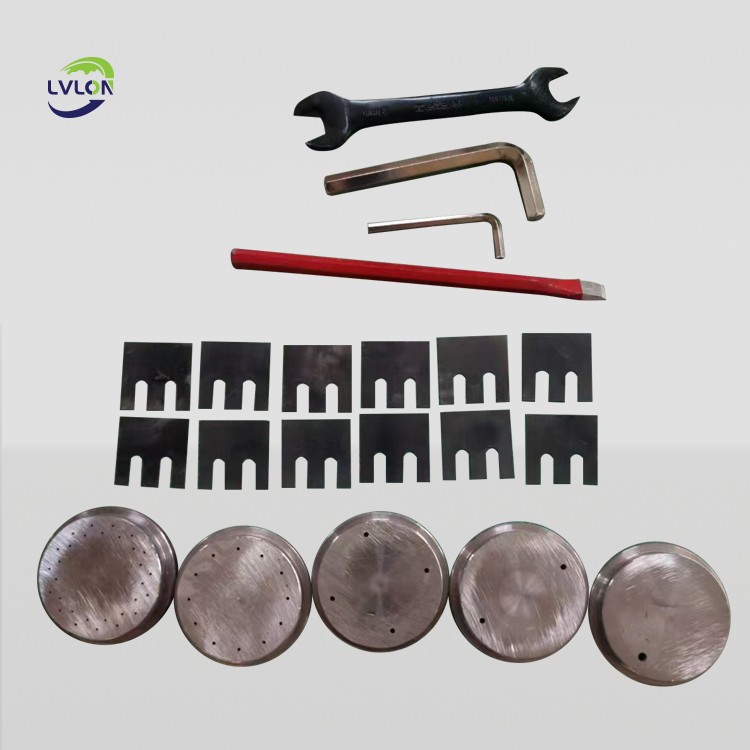
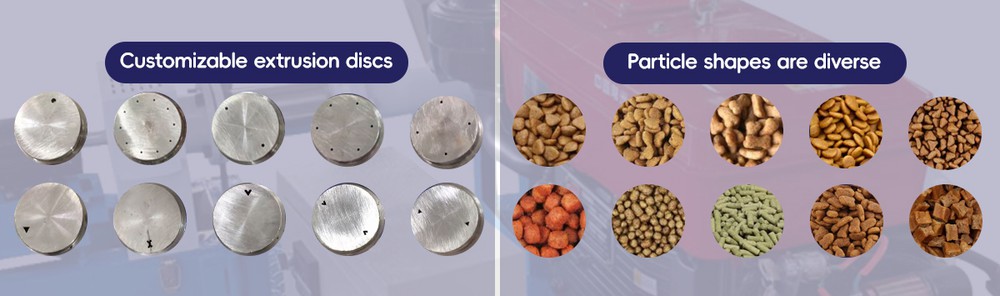
A complete dog food production line centers around a dog food extruder. Raw materials get finely ground by a hammer mill for dog food, then blended evenly in a ribbon mixer for dog food according to the recipe. After that, the mix goes into a twin screw extruder for dog food – high temperature and pressure do the job of starch gelatinization and expansion, which significantly boosts digestibility. The twin‑screw design really shines when you're working with high fresh‑meat formulas (fresh meat content can go over 40%). It handles meat meal, fish meal, bone meal, grains – all mixes evenly, and the dry dog food pellets come out full and well‑shaped. Swap the die, and you can make circles, triangles, bone shapes, rings – whatever the market wants.
After extrusion, the pellets go through a multi‑layer dryer to pull out moisture, then a dog food coating system adds oils, flavorings, and functional nutrients (joint care ingredients, digestive aids, etc.). Next, a counterflow cooler drops the temperature, a screener separates fines, and an automatic packaging system bags the finished product. The coating step is critical for palatability – our continuous drum sprayer makes sure oils and flavorings stick evenly, batch after batch. The whole line can run on PLC automation dog food line control, with real‑time monitoring of key parameters. That cuts down on manual work and keeps quality consistent during long production runs.
How dog food lines differ from livestock feed lines

There are a few fundamental differences. First, hygiene standards – dog food has to meet food‑grade requirements. Any part that touches the material is food‑grade stainless steel. Livestock feed only needs feed‑grade. Big difference. Second, the process itself – dog food relies on extrusion to gelatinize starch. A standard ring‑die pellet mill can't do that. Third, capacity – livestock lines typically run 5‑20 t/h, while small scale dog food production line or medium lines focus more on refined processing and quick changeovers. Typical capacity is 1‑5 t/h. Also, regulations actually say you can't share equipment between pet food and livestock feed lines – no cross‑contamination.
A real stable production example
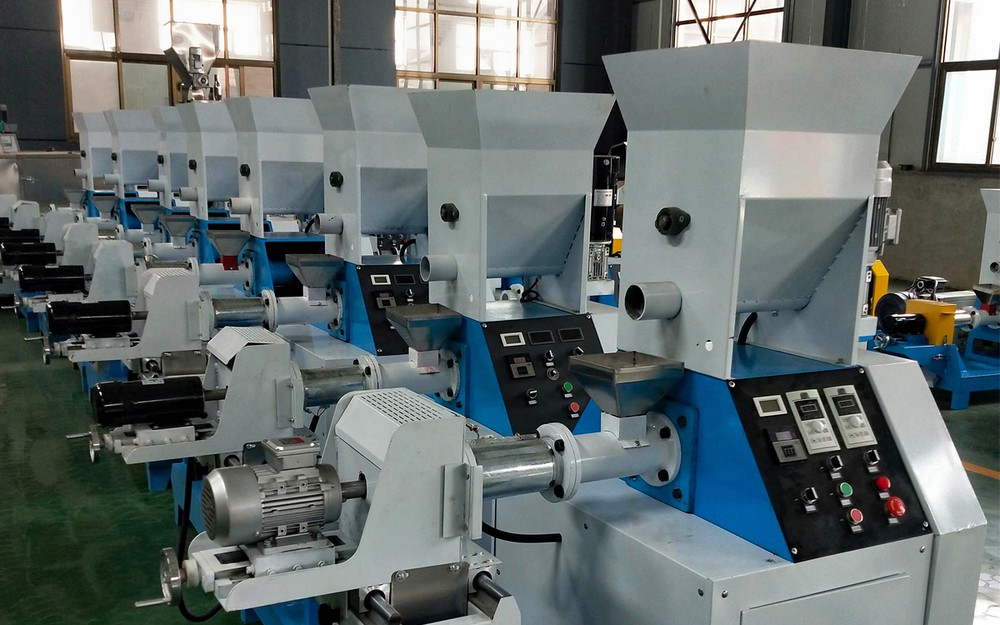
Take a 2 t/h small scale dog food production line we delivered in Southeast Asia. The customer is a mid‑sized dog food brand. The line covers everything – grinding, mixing, twin‑screw extrusion, drying, coating, cooling, packaging. Since startup, it's been running continuously for over 18 months, averaging 20 hours a day, with zero unplanned downtime from equipment failure. Pellet yield stays above 98%, coating uniformity passes random checks at 100%, and key specs like expansion ratio, bulk density, and water resistance all hit the customer's formula targets. They told us the line is easy to operate and maintain – die change takes less than 30 minutes, which lets them run multiple SKUs smoothly. That line is now their main production unit, and they're using it as a reference for their second‑phase expansion.
Adapting to different regional markets
Demand varies by region. In Africa and Latin America, most customers are starting small – a compact 100‑500 kg/h line works well. Low entry cost, fast payback, and easier local maintenance. In Southeast Asia, the market is more mature – a 1‑3 t/h medium line gives a good balance between capacity and flexibility. In the Middle East, you see more large distributors and brands – an automated 2‑5 t/h line with PLC control and remote operation features cuts down the need for highly skilled operators.
Whether you're a dog food distributor looking to expand your product line, a brand wanting your own production facility, or a large buyer planning a turnkey dog food plant or complete dog food production line, we offer a full chain of services – process design, equipment manufacturing, installation, commissioning, and after‑sales training.
Hot Tags: dog food production line, China dog food production line suppliers, factory
Previous
No InformationYou Might Also Like


Send Inquiry