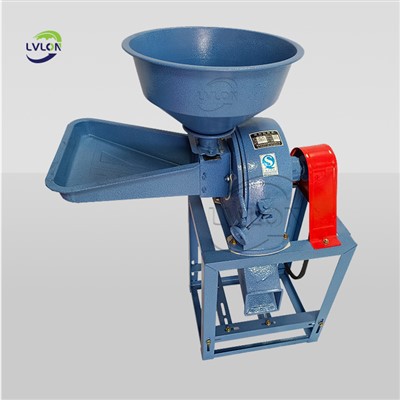
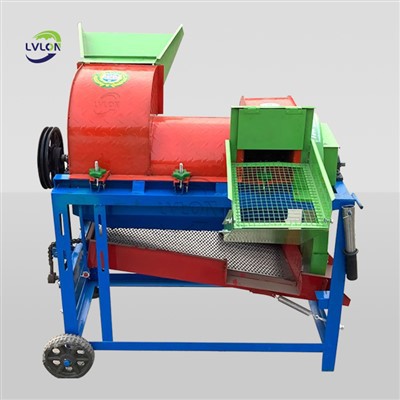
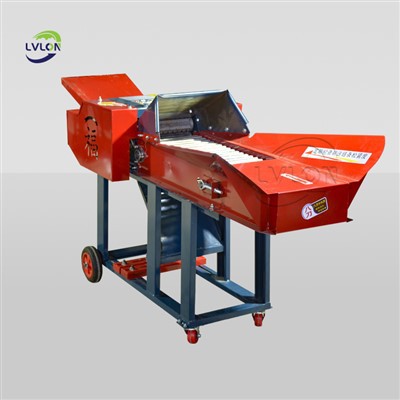
Hey there, fellow farmers, agricultural technicians, and anyone who's ever stood in a field wondering how to turn tough, grassy forage into something cows actually love to chow down on. Today, I'm pulling back the curtain on one of the workhorses of modern farming: the silage chopper machine. If you're in the market for one, you've probably seen terms like "Corn Silage Chopper" thrown around, or maybe even looked at a Self-propelled Corn Silage Harvester wondering what makes it tick. As someone who's been supplying these bad boys for years, I've talked to hundreds of folks who either use these machines daily or are just starting out and have no clue what parts actually matter. Let's break it down-no boring jargon, just real talk about the main components that make a silage chopper work like a charm.
First off, let's make sure we're all on the same page: a silage chopper isn't just a fancy lawnmower. It's a piece of heavy equipment designed to cut fresh forage (think corn stalks, grass, sorghum, even vegetable scraps) into small, uniform pieces so it can be fermented into silage-super nutritious feed for livestock. If the parts aren't working right, the whole machine is useless; you'll end up with uneven pieces that won't ferment well, or even jam the thing so bad you'll be stuck in the field for hours.
Let's start with the component that actually does the cutting: the cutting mechanism. This is the heart and soul of any silage chopper. There are two main types out there, but both have the same job: slice those stalks cleanly without bruising them too much (bruising can mess up the fermentation process). The first type is the rotary cutting system-this is what you'll find on most mid-sized and large machines, including a lot of Single Row Silage Harvesters. It's basically a big, heavy-duty rotor with sharp blades attached to it. When the rotor spins at high speed (usually 1,000 to 1,800 RPM), the blades swing through the forage as it's fed into the machine, chopping it into pieces between ½ and 1 inch long. The second type is the stationary blade system, used more on smaller, portable models like some Vegetable Chopper for Animal Feed. These have fixed blades mounted in a housing, and the forage is pushed against them by a moving beater, which also helps move the cut material along. Pro tip: if your cutting blades are dull, you're not just wasting power-you're getting uneven cuts that lead to moldy silage. That's why we sell replacement blades with every machine we supply; it's a small investment that saves you a lot of headaches down the line.


Next up, we have the feeding system. You can't chop anything if you can't get the forage into the machine in a controlled way, right? The feeding system is exactly what does that, and it's super important because if it's not working, you'll jam the chopper or feed too much at once, which can damage the blades. There are two parts to this system: the pickup header and the feed rollers. The pickup header is the part that goes into the field to grab the standing or windrowed forage. For corn silage, it's a heavy-duty header with tine bars that lift the stalks off the ground so they don't pick up dirt or rocks (which can nick the blades). For grass or hay, the header has a reel that pulls the forage onto the feed rollers. The feed rollers are the next step: they're usually two or three large, rubber-coated rollers that spin in opposite directions, gripping the forage and pulling it into the cutting chamber at a steady, consistent rate. This is key-if the rollers spin too fast, you'll get uneven cuts; too slow, and you'll back up the forage. Some newer models, like the Self-propelled Corn Silage Harvester, have adjustable feed roller speeds so you can tweak them based on the type of forage you're cutting. We always tell new customers to test the feed rate with a small batch first-don't just fire it up and dump a whole load of stalks in, because that's how jams happen.
Once the forage is cut, you need to move it out of the machine and into a wagon or a storage pile. That's where the discharge system comes in. The main part here is the discharge chute, which is a long, metal tube that can swing up and down, left and right, so you can direct the chopped silage exactly where you want it-no more chasing the machine with a wagon. Some chutes even have adjustable deflectors to change the direction of the flow, so you can pile silage evenly without having to move the wagon constantly. Attached to the chute is the fan, a high-powered blower that pushes the chopped material through the chute. If the fan isn't strong enough, the silage will just fall out in front of the machine, wasting time and energy. Another part of the discharge system is the accelerator rollers, which help speed up the flow of cut forage into the fan, making sure it doesn't clump up. For small-scale operations, the Vegetable Chopper for Animal Feed has a simpler discharge system-just a short chute that drops into a wheelbarrow or small container, which is perfect if you're only doing a few tons of feed a day.
Now, let's talk about the power system, because none of those parts would work without it. Silage choppers get their power from either a tractor's PTO (Power Take-Off) or their own built-in engine, depending on the size. Smaller, portable choppers (like many Straw Chopping Machine models) run on a tractor's PTO, which means you just hook it up to your existing tractor, no extra engine to maintain. Larger machines, especially Self-propelled models, have their own diesel engines (usually 100 to 500 horsepower) so they can move around the field on their own, which is a huge time-saver for big farms. The power system also includes the transmission (for self-propelled models) and the gearbox, which transfers power from the engine/PTO to the cutting rotor, feed rollers, and fan. This is another part where quality matters-cheap gearboxes will wear out fast under the heavy load of chopping corn stalks, so we only supply choppers with heavy-duty, industrial-grade gearboxes that can handle long hours in the field.
Wait, there's one more crucial component that a lot of people overlook: the control and safety system. No matter how good the parts are, if you can't operate the machine safely or control it easily, it's not worth anything. The control panel is where you adjust feed roller speed, rotor speed, and chute direction-most modern models have digital controls, but we still have some analog options for folks who prefer simplicity. The safety features are non-negotiable here. There are emergency stop buttons (usually two, one on the control panel and one on the side of the machine) that cut all power instantly if something goes wrong. There are also guards over all moving parts-feed rollers, rotor, chute-to keep your hands, clothes, or tools from getting caught. Some machines have sensors that will shut off the machine automatically if a jam is detected, which prevents the rotor from overloading. I can't tell you how many times I've heard horror stories about people getting hurt because they reached into a running chopper to clear a jam-safety is the number one thing, so we always make sure every machine we sell has top-of-the-line safety features.
Let's put this all together to make it make sense. Imagine you're in the middle of corn harvest. You fire up your Silage Chopper-let's say a reliable Corn Silage Chopper. The pickup header drops down, grabs a row of corn stalks, and the feed rollers pull them in. The cutting rotor, spinning at the right speed, slices the stalks into uniform ½-inch pieces. The fan pushes those pieces through the adjustable discharge chute, and you direct it straight into a waiting wagon. The power system is keeping everything running smoothly, and the safety guard is making sure you can't get too close to the moving parts. That's how the whole process works, and every component is essential.
Now, a quick note for different operations: if you're a small farm with 100 cows, a compact Straw Chopping Machine or Vegetable Chopper for Animal Feed might be all you need. They're easy to move around, don't require a big tractor, and can handle 5 to 10 tons of forage a day. If you're a large commercial farm with 1,000+ cows, you'll want a Self-propelled Corn Silage Harvester or Single Row Silage Harvester-they can handle 50+ tons an hour, work independently, and have features like GPS for precise field work. Whatever your size, the core components are the same; it's just the size and power that change.
Before I wrap this up, I want to leave you with this: when you're shopping for a silage chopper, don't just look at the price tag. Check the quality of the cutting blades, the strength of the feed rollers, the power of the fan, and the safety features. A cheap chopper might save you a few bucks upfront, but you'll spend more on repairs and wasted forage in the long run. We've been in this business for years, and we've seen it all-from machines that break down on the first day of harvest to ones that have run for 10,000 hours without a major overhaul. The ones that last? They have solid, well-built components that do the job right.
If you're ready to upgrade your forage processing or just have questions about which silage chopper is right for your operation, we're here to help. We don't do pushy sales-we talk to farmers like you, understand your needs, and help you pick the machine that'll make your life easier and your livestock happier.
References:
- Agricultural Machinery Manufacturers Association. (2022). "Key Components and Operational Standards of Silage Chopping Equipment." Journal of Farm Machinery Engineering, 18(3), 45-52.
- Smith, J. D. (2021). Forage Processing Techniques for Sustainable Livestock Feed. Rural Development Press, 112-128.
- European Committee for Standardization. (2020). Safety Requirements for Agricultural Silage Harvesters. EN 15522:2020.
- U.S. Department of Agriculture. (2023). Small-Scale Forage Chopping: A Guide for Beginner Farmers. USDA Extension Service, 22-30.