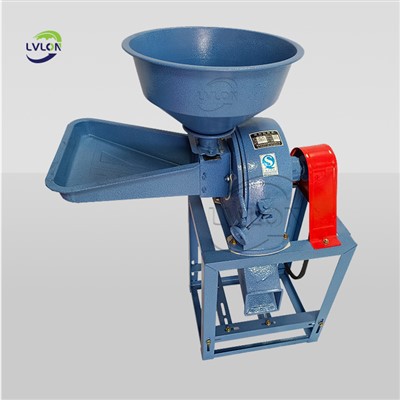
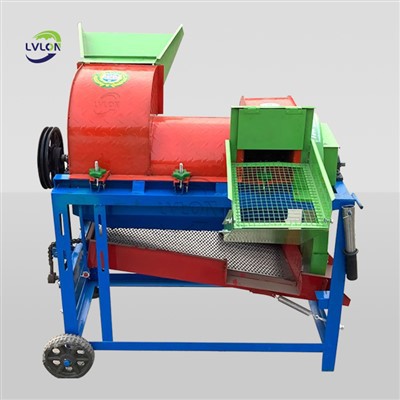
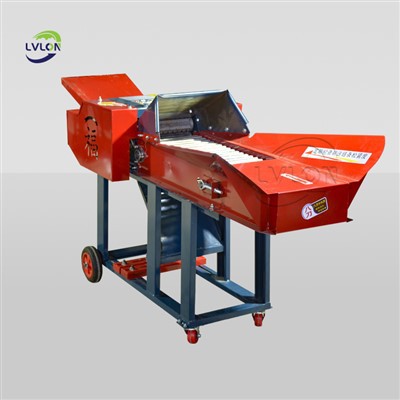
If you've ever stood in the middle of a harvest field, watching grain stalks pile high and wondering how you'll turn those bundles into usable crop before the rains set in, you've likely asked: what is the output capacity of a typical threshing machine? As a threshing machine supplier who's been working directly with farmers, small-scale processors, and agricultural contractors for over a decade, I've seen firsthand that the answer isn't one-size-fits-all. Capacity depends on crop type, machine size, power source, operator expertise, and even the condition of the grain going into the machine. But breaking down these variables can help you pick the right machine for your needs, whether you're processing maize, groundnuts, or a mix of oil seeds and nuts.
Let's start with the basics: threshing is the process of separating edible grain or kernels from the rest of the plant (straw, husks, chaff). A threshing machine streamlines this work, cutting labor time by 70% or more compared to manual threshing, which is a game-changer during peak harvest when every day matters. When I first got into this business, many of my customers asked for a simple number-how many tons per hour can this machine run? But after a few years of troubleshooting, I learned that giving a specific figure without context would only lead to frustration. For example, a machine that works perfectly for maize might underperform on groundnuts, and a small-scale machine meant for a family farm isn't going to match the output of a commercial unit working for a large cooperative.
Take maize, one of the most widely grown staple crops globally. Maize threshing is what many farmers start with when they're researching threshing machines, and the output here varies dramatically based on whether you're using a manual, semi-automatic, or fully automatic machine. Small, portable maize threshers for family farms typically have an output capacity of 500 to 1,500 kilograms per hour (kg/h), which is enough to process the maize grown on 2 to 5 acres in a single day. For medium-scale operations, semi-automatic maize threshers range from 1,500 to 4,000 kg/h, while commercial units can push 5,000 to 10,000 kg/h or more. If you're looking for a machine that also removes the husk at the same time, our Maize Dehusker and Sheller Machine is designed for that exact purpose. It combines husking and shelling into one step, cutting down on extra processing time, and its capacity falls right in the medium to commercial range-perfect for farmers who want to skip the extra work of dehusking maize before shelling.
Groundnuts, or peanuts, are another crop that requires a different kind of threshing setup. Groundnuts grow underground, so their shells need to be separated from the pods, not just from stalks, and their kernels are more delicate, so the machine has to be gentler to avoid damage. This limits the maximum capacity compared to maize threshers, because over-thrashing or rough separation can break kernels and reduce their market value. A small-scale Small Groundnut Shelling Machine, ideal for smallholder farms or local processors, has an output of 200 to 800 kg/h of shelled groundnuts. For medium operations, capacity jumps to 800 to 2,000 kg/h, while commercial groundnut shellers can hit 2,500 kg/h or higher. I always advise groundnut buyers to prioritize shell integrity over maximum capacity- a machine that processes 1,000 kg/h but damages 15% of the kernels will cost you more in lost revenue than a slightly slower machine that keeps 95% of kernels whole.
Now, if you process multiple types of crops, a multi-functional threshing machine is often the best investment. These machines are built to handle maize, sorghum, millet, small grains, and even small pulses without needing major adjustments, which makes them popular with mixed farmers or small processing businesses that don't want to buy separate machines for each crop. What I like most about these machines is their flexibility in capacity: depending on the crop, a mid-sized multi-functional thresher can run from 1,000 to 3,500 kg/h for maize, 500 to 1,200 kg/h for millet, and 300 to 900 kg/h for pulses. Our Multi-functional Threshing Machine has been a top-seller for years because it adapts to what farmers are growing each season-no need to store or maintain multiple pieces of equipment, which saves on both space and cost.


It's not just about the threshing step, though. Many of our customers process crops all the way from harvest to a sellable product, which often includes drying or roasting, and even extracting oil from grains or nuts. That's why we also offer complementary machines that pair with threshers. For example, if you process groundnuts or sunflower seeds, after threshing, you might want to roast them for market, and our Multi-function Nuts And Seeds Roasting Machine has capacities ranging from 50 kg per batch for small operations up to 500 kg per batch for commercial use, matching right up with the output of our threshers. For those looking to take it a step further, after threshing and cleaning oil seeds like sunflower, sesame, or groundnuts, a Commercial Oil Expeller Machine can turn those seeds into edible oil, with capacities from 100 to 1,000 kg per hour, depending on the model. These complementary machines help keep your processing line consistent, so you don't have to wait for another vendor to handle the next step.


Now, let's talk about the factors that can make a machine's actual capacity higher or lower than the manufacturer's stated number, because I've seen too many farmers get disappointed when their new thresher doesn't hit the advertised rate. First is power source: most small to mid-sized threshers run on electric motors or single-cylinder diesel engines. A 5-horsepower (HP) electric motor might push a small maize thresher to 1,000 kg/h, while an 8-HP diesel engine on the same model can add 200 to 300 kg/h, because diesel engines deliver more consistent power in dusty, uneven field conditions. For larger commercial machines, multi-cylinder diesel engines or even grid power for fully automatic units will deliver the highest capacity, but you have to make sure your farm or processing site has the right power supply-no point in buying a 10,000 kg/h thresher if you don't have enough electricity to run it.
Crop condition is another big one. If you're threshing maize that's too wet (above 20% moisture content), the kernels will stick together, and the machine has to work harder to separate them, cutting capacity by 30% or more. Dry maize (12-15% moisture) threshes much faster, with less damage. For groundnuts, if the pods are still damp from being dug up, shelling will be slower, and you'll end up with more broken kernels. I always tell customers to dry their crop to the recommended moisture level first-this step might take an extra day, but it will double the threshing capacity and improve the quality of your final product.
Operator skill matters too. A new operator who doesn't know how to feed the crop evenly, adjust the threshing gap, or clean the chaff screen will get a lower capacity than an experienced operator. Even a small mistake, like feeding too much crop at once, can overload the machine and cause it to slow down or jam, which wastes time and cuts into your daily output. That's why we provide free training for all our customers when they buy a machine-we show them how to adjust settings for different crops, maintain the machine to keep it running at peak efficiency, and troubleshoot small issues before they turn into big problems.
To give you a real-world example of what this looks like, last harvest season, I worked with a 10-acre maize farmer in western Kenya who bought our standard maize thresher, which is rated for 2,500 kg/h. When he first used it, he was only getting 1,600 kg/h because his maize was 22% moisture, and he was feeding it too quickly. After we showed him how to dry the maize to 14% moisture and adjust the threshing gap, his output jumped to 2,400 kg/h-almost the full rated capacity-with less than 2% broken kernels. That's the kind of result we want every customer to get, and it's why we focus on giving clear, practical advice alongside our machines, not just a spec sheet.
If you're still wondering what output capacity is right for your operation, here's a quick guide to help you narrow it down:
- Smallholder farms (2-5 acres of one crop): 500-1,500 kg/h capacity, portable or semi-portable machine, ideal for family use or selling to local buyers.
- Medium-scale operations (5-20 acres, or processing for local markets): 1,500-4,000 kg/h capacity, multi-functional or single-crop machine, enough to process your entire harvest in 1-3 days.
- Commercial or large cooperative operations (20+ acres, or selling to regional/national markets): 4,000+ kg/h capacity, fully automatic commercial machines, built for high-volume, consistent processing.
The worst mistake I see farmers make is buying the biggest, highest-capacity machine they can afford, only to realize it's too big for their needs-they're paying for power and capacity they don't use, and the machine is underutilized all year. On the other hand, buying a machine that's too small means you'll have to hire extra labor during harvest, which can be more expensive upfront than investing in the right size machine.
At the end of the day, the output capacity of a typical threshing machine isn't a fixed number-it's a range that adapts to your crop, your operation, and how well you maintain and operate the machine. As a supplier, my goal isn't to just sell you a machine; it's to help you find one that fits your specific needs, so you can process your harvest faster, with less labor, and get the best possible price for your crop. If you're ready to talk through your harvest plans, compare models, or get more details on the machines we offer, we're here to help you navigate every step from choosing the right thresher to complementary equipment like dryers or oil expellers. Reach out to our team to start a conversation about your threshing needs.
References
- Food and Agriculture Organization (FAO). (2021). Harvest and Post-Harvest Technology for Smallholder Farmers. Rome: FAO.
- Agricultural Engineering Department, University of Illinois. (2020). "Thresher Capacity and Efficiency for Small Grains and Oil Seeds." Journal of Agricultural Machinery Systems, 18(2), 45-62.
- Kenya Agricultural and Livestock Research Organization (KALRO). (2022). Maize and Groundnut Processing Equipment Guide. Nairobi: KALRO.
- Threshing Machine Manufacturers Association. (2023). "Standard Specifications for Grain Processing Equipment." Global Agricultural Equipment Report, 12(4), 112-120.