Hey everyone, it's Jake here, one of the team members at the silage chopper machine supplier you've probably heard a little about (no fancy corporate name needed here). If you're a farmer, ranch manager, or even someone just getting into the feed production game, odds are you've asked yourself: "What's the actual price range for these things? I don't want to overspend, but I also don't want a cheap piece of junk that'll break down after 2 uses." Today, I'm breaking this down-no stuffy jargon, just real, straight talk based on what we've seen clients pay, what makes prices jump or drop, and what you actually get for your cash.
First off, let's get one thing straight: silage chopper machines aren't one-size-fits-all. There are tiny, tabletop models for small hobby farms, and massive, self-propelled units that can tear through an entire cornfield in an hour. That spread in capability is exactly why the price range is so huge-we're talking a few hundred dollars on the low end, up to six figures for the heavy-duty stuff. Let's start with the budget-friendly options first, because that's where most new folks dip their toes.
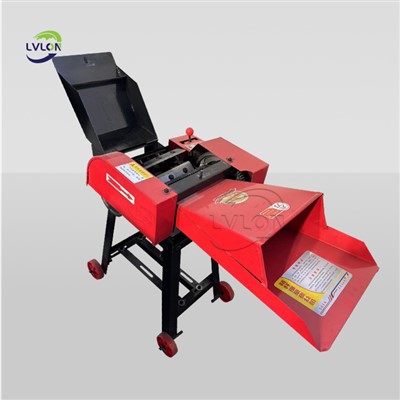
If you've got a small to mid-sized hobby farm or a side gig with like 50 or less head of cattle, sheep, or goats, a basic manual or semi-electric straw chopping machine is your bread and butter. These are the ones you'd probably run with a lawn tractor or even plug into a standard 110V outlet at home. No fancy tech, just a solid blade to chop up hay, straw, or even small corn stalks into the right size for feed. How much are these? We're looking at $300 to $1,500 total. Wait, hold on-don't roll your eyes at the $300 one. I've seen farmers use these for years without issues, as long as you don't overload it or try to chop something it's not made for (like whole corn cobs, that'll jam it faster than you can say "silage"). The $1,500 models are usually a little sturdier, have a bigger hopper, and can handle a bit more volume, so if you've got 50 to 100 animals, that's probably your sweet spot. They're also way quieter than the cheap ones, which is a win if you live near neighbors.
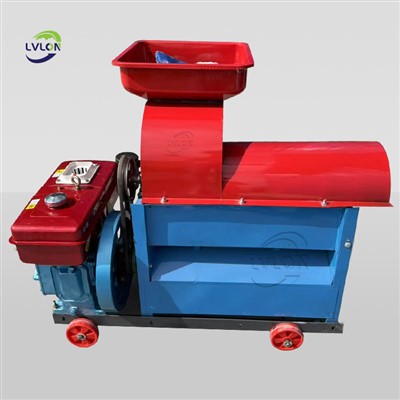
Next up, the mid-range crew. This is where most of our regular clients land-small to mid-sized commercial operations, maybe 100 to 500 head of livestock, or even small-scale forage production for sale. These are the semi-automatic or fully automatic straw choppers, and they include specialized models like the single row silage harvester. Wait, why single row? Because a lot of mid-sized farms don't need a massive 10-row harvester that costs as much as a new pickup. The single row model is perfect for chopping corn, sorghum, or grass silage one row at a time, and it can tow behind a utility tractor, so you don't need a big rig to run it. The price here? That range is roughly $2,000 to $15,000. Let's break that down: a basic semi-automatic corn silage chopper (the stationary ones that feed into a trailer behind your tractor) starts around $2,000 for a small 5HP model, up to $5,000 for a 15HP one that can keep up with a full-size tractor. The single row silage harvesters we sell for mid-tier setups? They land between $10,000 and $15,000, which is a steal when you think about how much time they save vs. chopping by hand or with a tiny budget model. A friend of mine runs a 200-head cow operation in Iowa, and he upgraded from a $800 budget chopper to one of these single row ones 3 years ago-said he's saved over 100 hours a year on chopping, which is worth way more than the machine itself.
Then there's the heavy-duty end of the spectrum. If you're a large commercial farm, have 500+ head, or you're producing silage to sell to other operations, you need the big guns. This is where compact self-propelled forage harvesters come in, and even larger models, though we focus on the compact ones since they're more versatile for smaller commercial operations that don't need a full-size self-propelled unit. Wait, what's the difference between a compact self-propelled forage harvester and a mid-range tow-behind? The compact one has its own engine, so you don't need a separate tractor to run it. That's a game-changer for big fields because you can drive straight through, chop, and blow the silage into a truck or trailer without switching between machines. The price here? These range from $50,000 all the way up to $120,000, depending on the horsepower, blade quality, and extra features. For example, a compact self-propelled model with 100HP, a heavy-duty chopping head, and a built-in conveyor for loading goes for around $70,000 to $90,000, while a higher horsepower one with GPS tracking and variable chopping length settings can hit $120k. I won't lie, that's a chunk of change, but if you're producing 1,000 tons of silage a year to sell, you'll make that back in 1 or 2 seasons, easy.
Wait, I should also mention the specialty ones that people forget about-like vegetable chopper for animal feed. A lot of farmers use root veggies (carrots, beets, potatoes) or even leftover produce to mix into their silage, and a dedicated vegetable chopper is way better than trying to force a regular silage chopper to do it. These are a subset of the lower to mid-range, usually between $95 and $170 which is a good add-on if you're looking to diversify your feed and cut down on waste from produce that would otherwise go bad.


Now, let's talk about what actually affects the price, because it's not just "bigger = more expensive" (though it mostly is). First, power source: manual models are the cheapest, then electric, then PTO (power take-off, runs off your tractor), then self-propelled with their own diesel engines. Diesel engines are way more powerful, so that's why the self-propelled ones cost so much. Second, capacity: how much chopping you can do per hour. A small budget model does like 500 lbs an hour, while a mid-range single row harvester does 5,000 to 10,000 lbs an hour, and the heavy-duty compact self-propelled does 20,000+ lbs an hour. Obviously, higher capacity means higher price. Third, blade quality and design. Cheap choppers use blunt, low-quality steel blades that need replacing every few months, while good ones use hardened tool steel that can last years, even with tough corn stalks. Fourth, extra features: things like variable chopping length (so you can make finer feed for calves and coarser feed for mature cows), built-in blowers for loading, dust suppression, and even remote control operation for the bigger models. Each of these adds a little to the price, but they save you time and hassle long-term.
Also, don't sleep on used machines! A lot of our clients buy 2 to 3 year old used models for 30 to 50% less than new, which is a huge deal if you're on a tight budget. Just make sure you check the blades, engine (if self-propelled), and any wear and tear before you buy-we've got a guide on our site for that, if you need it. I've seen a 1-year-old compact self-propelled forage harvester go for $45k, which is way better than the $70k new price.
Wait, let's address a common question I get: is there a "one size fits all" number? No, not really. If you're a hobby farmer with 20 goats, the $300 manual straw chopper works. If you're a mid-sized commercial farm with 300 head, the single row silage harvester for $10k is the way to go. If you're a big operation producing silage for sale, you need the $70k compact self-propelled model. The worst thing you can do is buy a machine that's too big for your needs-you'll waste a ton of money on capacity you'll never use-and the second worst is buy one that's too small, and end up having to replace it in a year because it can't keep up.
Now, if you're still not sure which price range is right for you, or you want to see the specific specs for any of these models, we can talk. Like, if you check out our corn silage chopper page, you can see what mid-range models we have, or our compact self-propelled forage harvester page for the heavy-duty stuff. We also have the single row silage harvester link if that's more your speed, and even the vegetable chopper for animal feed if you need that specialty setup. No pressure, just honest advice.
At the end of the day, the price of a silage chopper machine is an investment in your livestock's health and your own time. A good machine will save you hours every harvest, improve the quality of your feed, and last you 10+ years. A cheap one might seem like a deal, but it'll jam, break, and cost you more in repairs down the line. That's why we don't just sell machines-we help you pick the one that fits your operation, not just your budget.
If you're ready to chat about what you need, or get a custom quote, hit us up. We don't do pushy sales stuff, just real answers about price, specs, and which model will work best for you.
References:
- USDA Agricultural Resource Management Survey, 2022, Cost of Equipment for Forage Production
- Equipment Market Association, 2023, Used Farm Machinery Price Trends for Silage Choppers
- Feedlot Management Magazine, 2024, Mid-Range Silage Equipment ROI Analysis