


Previously, we introduced the possible causes of motor burnout. Many friends are more interested in how to work backward from the post-burnout condition to identify the cause, and to analyze whether liability rests with the manufacturer or the user. Today, we will share some typical cases with you.
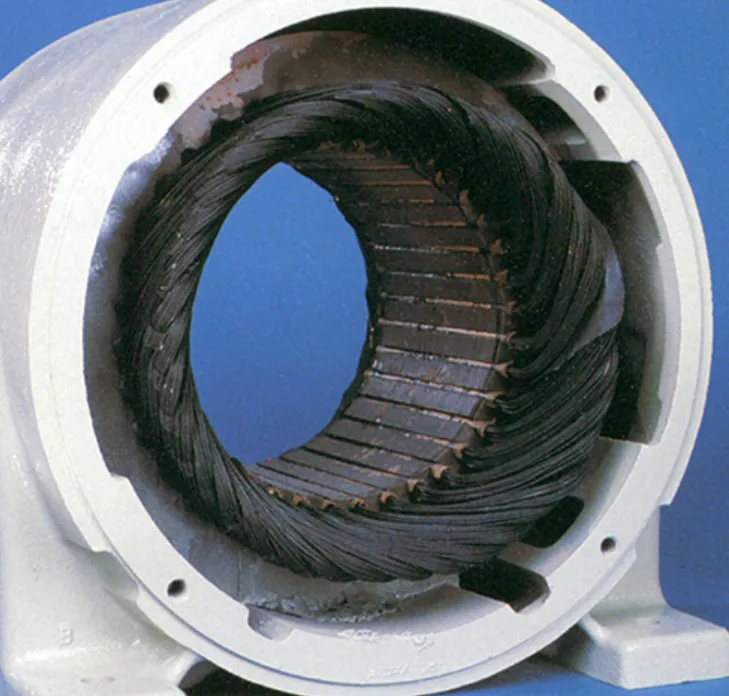
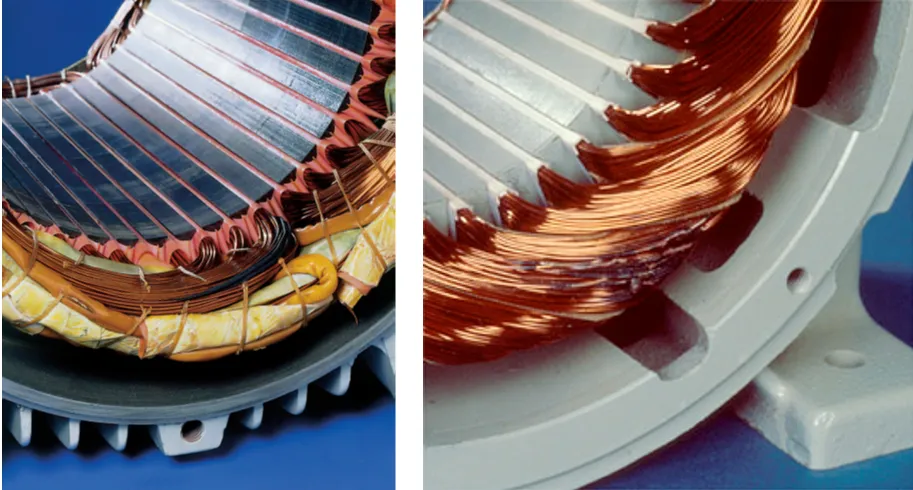
1. The entire winding is burned black, as shown in the figure below. This condition is usually caused by motor overload operation, locked rotor, excessively high or low voltage, frequent start-stop cycles, etc. It can basically be determined to be the user's liability.
2. Part of the winding is entirely blackened. Depending on the different connection methods of the motor, this manifests in two different forms, as shown in the two figures below. This condition is usually caused by phase loss (open-phase operation), and can basically also be determined to be the user's liability.
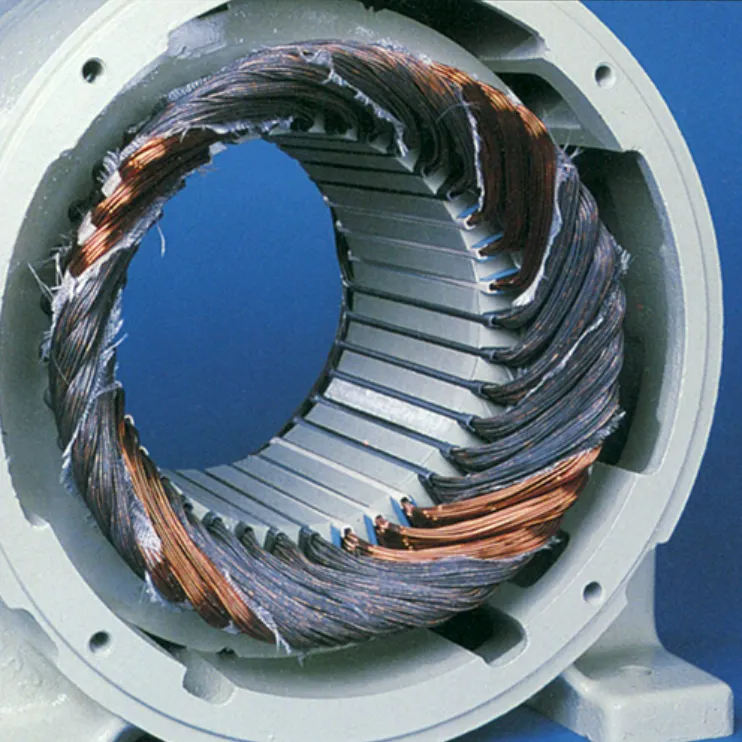
Phase loss in a star-connected motor: two-thirds of the windings burned black
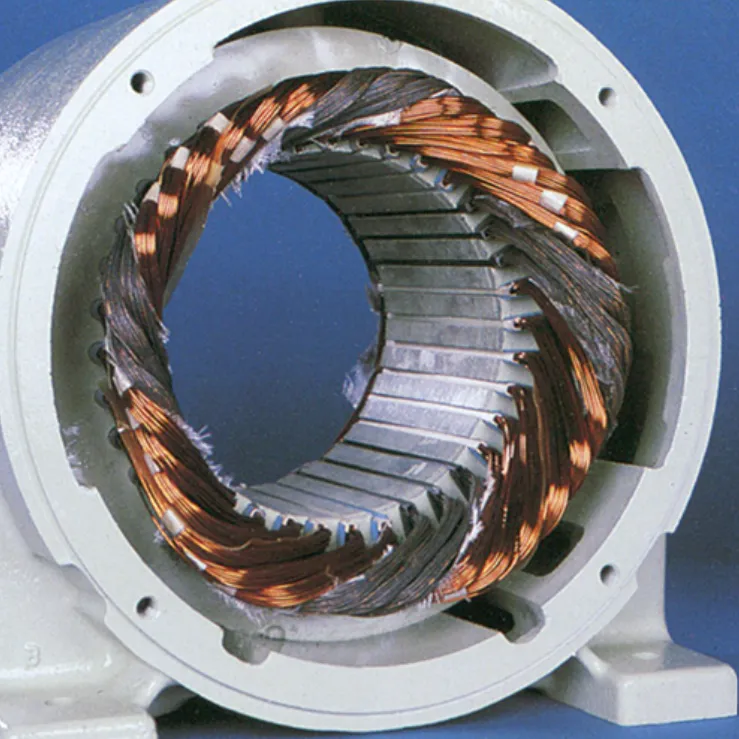
Delta-connected motor with phase loss - schematic diagram of burnout (one-third of the windings burned black
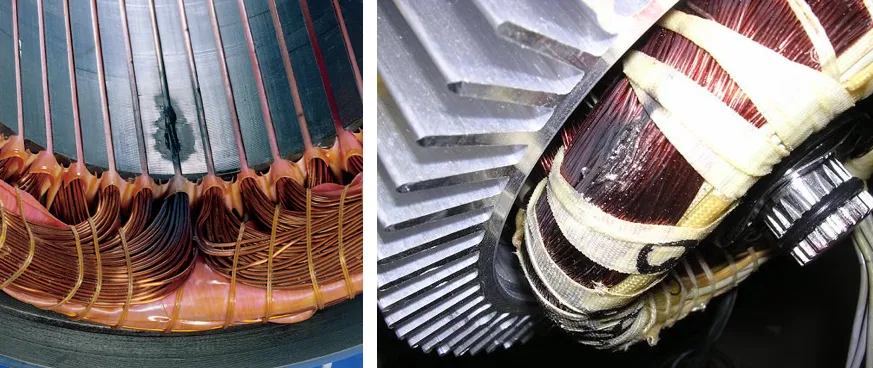
3. Localized blackening of the winding. Depending on whether it occurs within the same phase, this is classified as an inter-phase short circuit fault or a turn-to-turn short circuit fault. This is usually caused by contaminants present inside the winding or damage and abrasion of the enameled wire. If the motor has never been opened, such liability is usually attributed to the motor manufacturer.
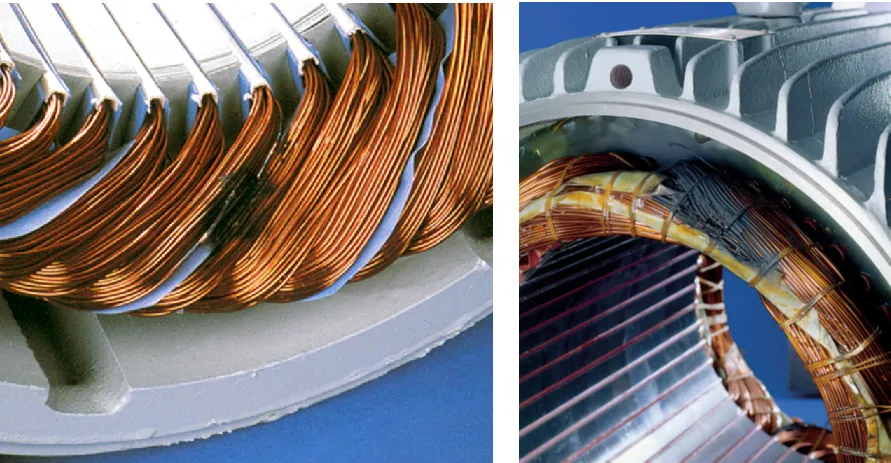
Local blackening of the enameled wire of two phases caused by an inter-phase short circuit (on both sides of the inter-phase insulating paper)
Blackening of multiple turns within the same phase caused by a turn-to-turn short circuit
4. Local ground fault. This is usually local burnout caused by contact between the enameled wire and the iron core, or the front/rear end covers. Specific causes may include: damaged slot insulation, sharp or misaligned stampings, out-of-tolerance winding dimensions, insufficient creepage distance reserved, etc. This can generally be determined to be the motor manufacturer's liability.
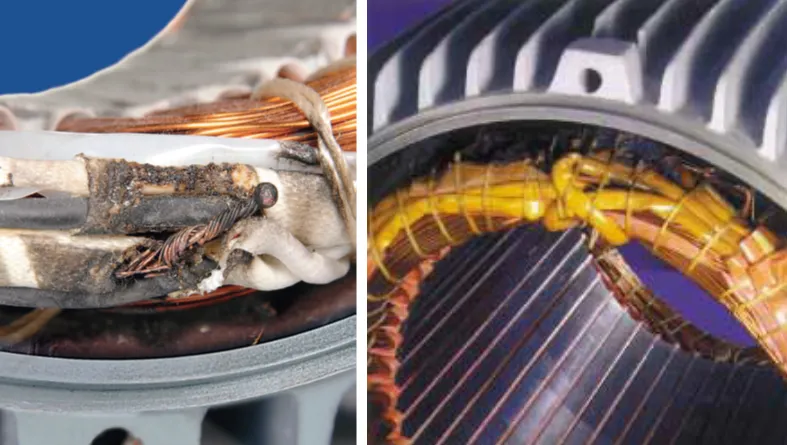
5. Short circuit at the lead wire connection. This is usually caused by internal contamination of the motor, poor insulation, or poor contact at the joint. This is generally determined to be the motor manufacturer's liability.
The above are some of the more common signs of burnout, along with their causes and liability allocation. It should be noted that, due to the complexity of motor structures and operating conditions, the allocation of liability is only approximate (not 100% definitive).


