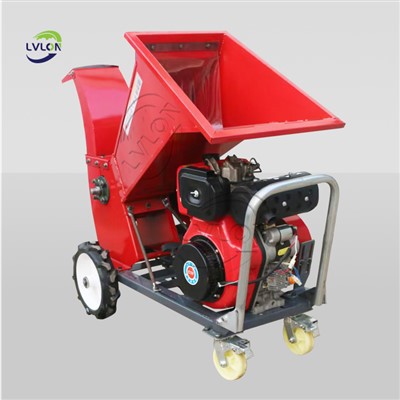
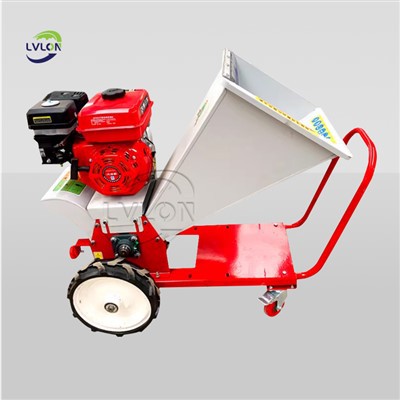
Lvlon makes wood processing machinery in Henan, China. The wood shaving machine serves particleboard plants, paper mills and their feedstock suppliers, packaging producers, livestock farms and bedding suppliers, and biomass fuel plants. In-house steel fabrication and knife assembly. Factory-direct pricing. OEM on feed configuration and output size.
Shavings, Not Chips
The difference is in the cut. A wood chipper cuts across the wood and produces blocky chips-the feedstock for pulp and pellet lines. A wood shaving machine cuts along the wood surface and peels off thin, flat shavings-the curled flakes that hand planes produce. Same tree, two completely different products.
The distinction decides the buyer. Particleboard plants spread shavings in even mats before pressing-chips do not mat properly. Animal bedding needs soft, airy shavings that absorb moisture without bruising hooves. Fragile shipments are cushioned with loose, springy shavings. All of these want the shaving form, and none of them can source it by hand at industrial scale. A single woodworker planes perhaps a few hundred kilograms a day. The 1000 model produces 2–3 tonnes per hour.
The Cut That Matches the Hand Plane
The knives rotate at 2,900–3,200 rpm and peel the wood surface along the grain. Each pass of a knife lifts one shaving-thin, smooth-surfaced, uniform in thickness-the quality benchmark being exactly what an experienced woodworker produces by hand. The automatic feeder keeps material flowing into the knives at a steady rate, so shaving thickness stays consistent from the first cut of the shift to the last.
The automatic feed is the labor answer. Material feeds itself-no operator standing at the machine feeding piece by piece. One machine replaces an entire hand-shaving crew, with the output quality controlled by the machine rather than by the fatigue of a worker's arms.
Three Raw Materials, Five Markets
The machine accepts three feedstocks. Whole logs go through as-is. Branches and slash-forestry trimmings and logging residue-convert into product. Board offcuts from woodworking plants, previously waste, become raw material. For a plant that sits between a sawmill and the animal bedding market, the machine turns another factory's waste into its own product.
The output serves five markets: particleboard furnish, paper pulp feedstock, transport packaging cushioning, animal bedding for pigs, cattle and sheep, and biomass energy material. One machine, one output form, five buyers.
Specifications
| Model | Power | Speed | Capacity |
|---|---|---|---|
| 600 | 22 kW | 3,200 rpm | 600–1,200 kg/h |
| 800 | 37 kW | 3,000 rpm | 1,500–2,000 kg/h |
| 1000 | 45 kW | 2,900 rpm | 2,000–3,000 kg/h |
All models: Fully automatic feeding, uniform thin shavings, accepts logs / branches / board offcuts, 1-year warranty. OEM available.
FAQ
Q: Shaving machine or wood chipper?
Shaving machine: knives peel the surface along the grain-thin flat shavings for bedding, particleboard and packaging cushioning. Wood chipper: knives cut across the wood-blocky chips for pulp and biomass fuel. The product form decides the machine.
Q: What raw materials can it process?
Whole logs, branches and board offcuts. Feed must be free of metal (sort or magnetically separate first) and within the feed opening-oversized logs need pre-cutting.
Q: What is the output rate?
600 model: 600–1,200 kg/h. 800 model: 1,500–2,000 kg/h. 1000 model: 2,000–3,000 kg/h. Output varies with log diameter, moisture content and feed speed.
Contact Lvlon for model selection, output specification and factory quotation.