

The core of ring die maintenance is "rust prevention, clogging prevention and uniform wear".
Let's first talk about the daily operation norms. Because to maintain the ring die well, the prerequisite is to operate in a standardized manner. This is the best maintenance for the ring die.
1. Standardized start and stop: Use "fuel" before starting and "clear the fuel" before stopping.
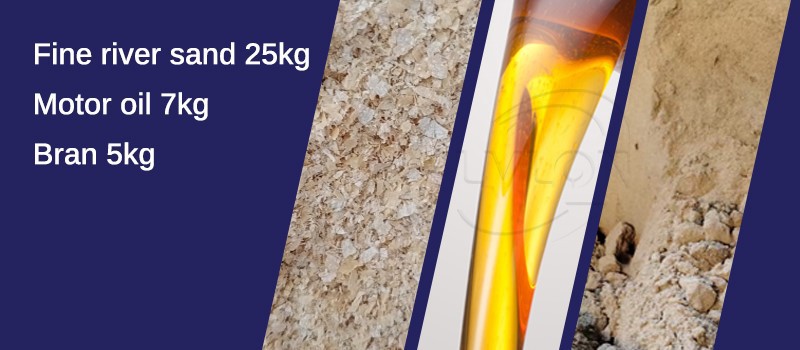
A. Before operation: For new ring dies or those that have been idle for more than 8 hours, before starting up, the die holes must be filled with oily materials (it is recommended to mix soybean meal with 3% to 5% edible oil, or professional "start-up material"). First, manually feed in 2 to 3 kilograms, then start the main machine. After the oil mixture evenly produces granules, gradually resume normal production. The main purpose of doing this is to form a lubricating layer on the metal surface of the ring die to prevent severe wear on the surface of the ring die and the die holes caused by direct dry material friction.
B. After operation: Before the production is completed, feed in oily materials or special cleaning particles and run for 3 to 5 minutes to completely extrude the production from the die holes. The purpose of doing this is to keep the feed rich in starch and protein in the mold holes, otherwise it will harden and form scale, which is very difficult to clean.
2. During operation, load monitoring is carried out
A. When feeding, it is essential to do so evenly and continuously to prevent sudden increases or decreases, which may cause excessive local load on the ring die.
B. Listen for the running sound. Abnormal vibration or noise indicates that the gap between the ring die and the pressure roller is uneven, or hard foreign objects have mixed into the material.
Let's talk about periodic inspection and gap adjustment.
A ring mold inspection must be carried out every 200 to 300 hours of operation.
1. Inspection of the gap between the ring die and the pressure roller
The gap standard is usually 0.1 to 0.3mm, which is equivalent to the thickness of a business card paper. Excessive clearance can lead to slippage and no material discharge. Too small a gap will accelerate wear and generate high temperatures.
2. Wear of the pressure roller
Check the grooves on the surface of the pressure roller. When obvious smooth planes appear or the grooves become shallower, replacement is required. Here, it is essential to note that the pressure rollers must be in pairs to ensure that the gap between the pressure rollers and the ring die is consistent. Severely worn pressure rollers will accelerate the damage of the ring die like a "file".
3. The inner wall of the ring die is worn
Check the working surface where the ring die contacts the pressure roller. If there is uneven groove-like wear, it indicates that there is a problem with the ring die. It is necessary to inspect the material conditioning effect, whether the feeding distribution is uniform, and whether the pressure roller is out of round. If conditions permit, consider replacing the ring die.
After discussing the daily operation norms and the periodic inspection intervals, let's now talk about the deep cleaning and storage of the ring die, which is a key point in the maintenance of the ring die.
When production continues to decline or is planned for a long period of downtime, the ring die must undergo deep cleaning.
1. There are several methods for cleaning the ring die after disassembly:
A. The preferred choice is A dedicated ring die cleaning machine, also known as a through-hole machine, which uses a drill bit to reverse and withdraw the blockage. This is the safest, most efficient method that causes the least damage to the die holes.
B. Bubble cleaning method, the ring die completely into the warm alkaline cleaning liquid, or special feed mold cleaning agent, placed for a few hours, etc. After the material on the ring die softening, clean with a copper brush or wooden stick, do not use a brush or sharp tools. Finally, rinse thoroughly with clean water and dry thoroughly with a high-pressure air gun.
C. Boil the ring mold in boiling water for 1-2 hours, until the residual material in the mold hole expands and softens before cleaning up. This method has an impact on the properties of metals and is generally not recommended for cleaning.
2. Rust prevention for long-term storage of the ring die
A. After cleaning and drying, spray A layer of food-grade anti-rust oil evenly on the inner and outer surface of the ring mold and the hole of the mold.
B. Wrap in oily paper or plastic bag and store on dry, ventilated indoor shelves to avoid direct contact with the ground.


